
 Global Finds
  Quick Commerce
  Daily Bazar
  Electronics & Appliances
  Mother, Baby & Toys
  Beauty
  Sports
  Automotive
  Stationery, Books & Music
 _20.png) Fashion Luxe
Fashion Luxe  Fashion
 _20.jpeg) Home
Home  Garden & Pet Care
  Special Weekly Offer
  Grocery
  Global Finds
  Quick Commerce
  Daily Bazar
  Electronics & Appliances
  Mother, Baby & Toys
  Beauty
  Sports
  Automotive
  Stationery, Books & Music
 _20.png) Fashion Luxe
Fashion Luxe  Fashion
 _20.jpeg) Home
Home  Garden & Pet Care
  Special Weekly Offer
  Grocery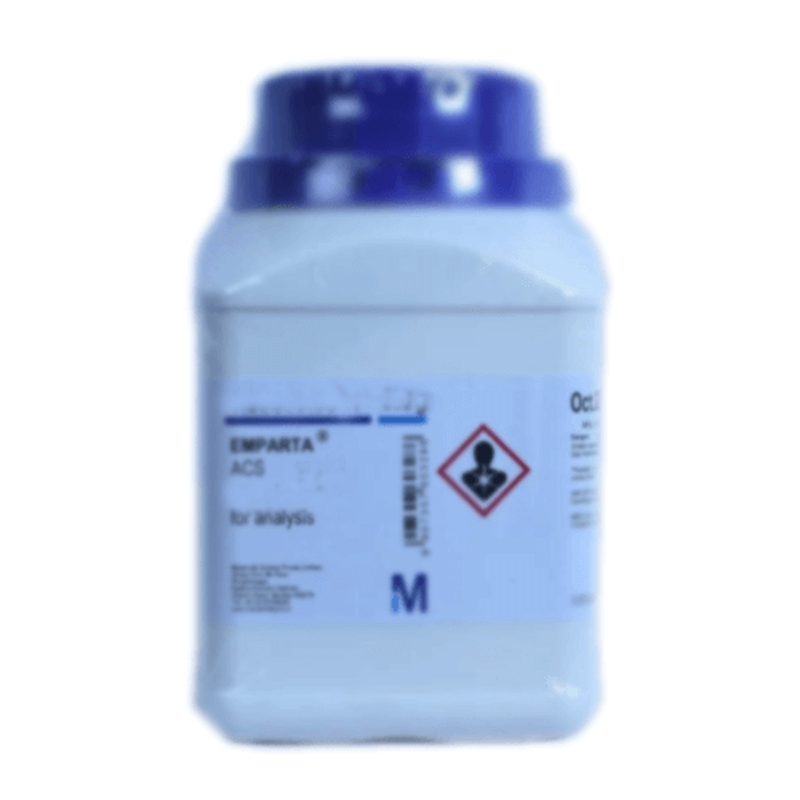
Zinc Chloride 500 gram Merck Brand Lab Grade, Made in India for Analysis and Research. This is a lab-grade chemical ideal for school, college, and university science labs, and analysis.
\n
\nZinc chloride (ZnCl₂) is an inorganic compound made up of zinc and chlorine. It is typically encountered as a white, odorless, highly soluble solid that can appear as either a crystalline or granular material. It has a variety of uses across different industries due to its unique chemical properties.
\n
Key Properties of Zinc Chloride:
\n-
\n
- Chemical Formula: ZnCl₂ \n
- Molar Mass: 136.3 g/mol \n
- Appearance: White crystalline solid or granular \n
- Solubility: Highly soluble in water, alcohol, and ether. \n
- Melting Point: 275°C (527°F) \n
- Boiling Point: 732°C (1,350°F) \n
Common Applications of Zinc Chloride:
\n-
\n
- Industrial Uses:
\n
-
\n
- Flux in Metalworking: Zinc chloride is used as a flux in soldering and galvanizing processes to prevent the oxidation of metals. \n
- Wood Preservation: It's used as a wood preservative to protect wood from decay and pests. \n
- Textile Industry: It is used in the manufacture of rayon, a type of synthetic fiber. \n
- Chemical Synthesis: Zinc chloride is used as a catalyst or a reagent in various chemical reactions, especially in organic synthesis. \n
\n - Electronics and Batteries:
\n
-
\n
- Used in the production of dry-cell batteries (such as zinc-carbon batteries). \n
\n - Antiseptic and Disinfectant:
\n
-
\n
- In diluted forms, it can be used as a disinfectant or antiseptic in medical treatments for minor wounds and skin infections. \n
\n - Water Treatment: Zinc chloride is used in some water treatment processes, such as coagulation or flocculation. \n
Safety Considerations:
\n-
\n
- Toxicity: It can be toxic if ingested or inhaled in large amounts. It can irritate the skin, eyes, and respiratory system. \n
- Corrosive: It is a corrosive material, and caution should be taken when handling it, particularly in its concentrated form. \n
- Environmental Impact: It can be harmful to aquatic life if released into water bodies, and it is generally advised to handle and dispose of it carefully. \n
Reactions:
\n-
\n
- Hydrolysis: When it dissolves in water, it can hydrolyze to form acidic solutions.
 \n
\n - Reaction with Bases: Zinc chloride can react with strong bases to form zinc hydroxide. \n
-
\n
- Lab Grade Zinc Chloride \n
- Pack Size: 500gm \n
- Brand: Merck, India \n

Customer Questions and answers :
Login to ask a question
