
 Global Finds
  Quick Commerce
  Daily Bazar
  Electronics & Appliances
  Mother, Baby & Toys
  Beauty
  Sports
  Automotive
  Stationery, Books & Music
 _20.png) Fashion Luxe
Fashion Luxe  Fashion
 _20.jpeg) Home
Home  Garden & Pet Care
  Special Weekly Offer
  Grocery
  Global Finds
  Quick Commerce
  Daily Bazar
  Electronics & Appliances
  Mother, Baby & Toys
  Beauty
  Sports
  Automotive
  Stationery, Books & Music
 _20.png) Fashion Luxe
Fashion Luxe  Fashion
 _20.jpeg) Home
Home  Garden & Pet Care
  Special Weekly Offer
  Grocery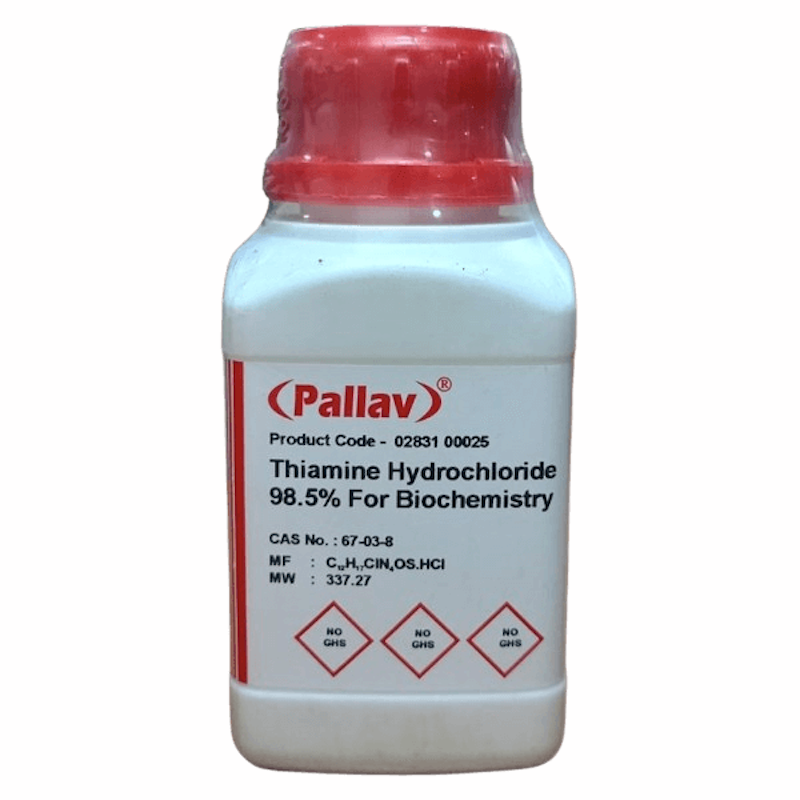
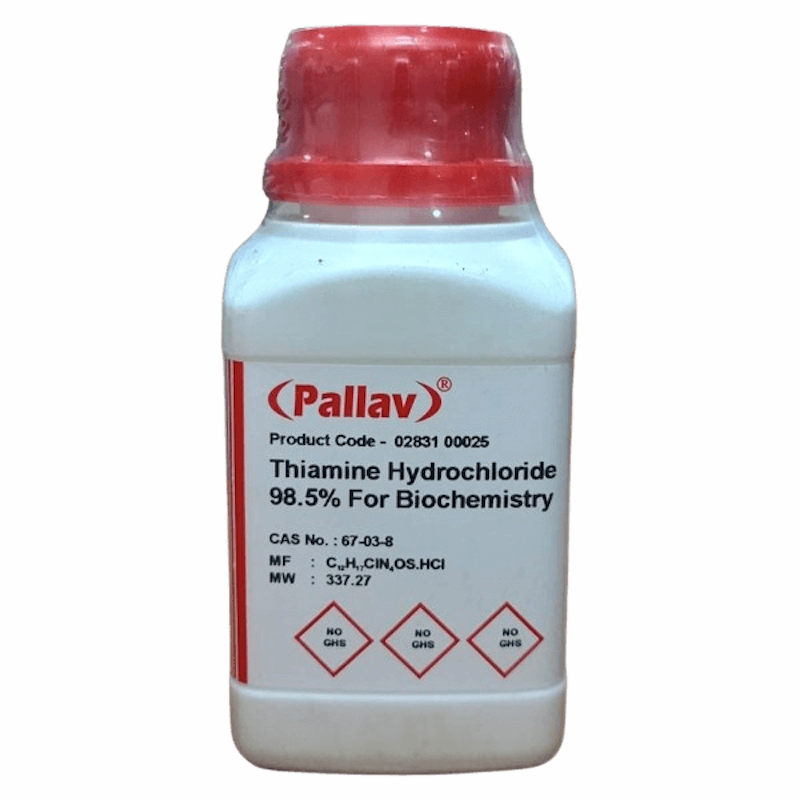
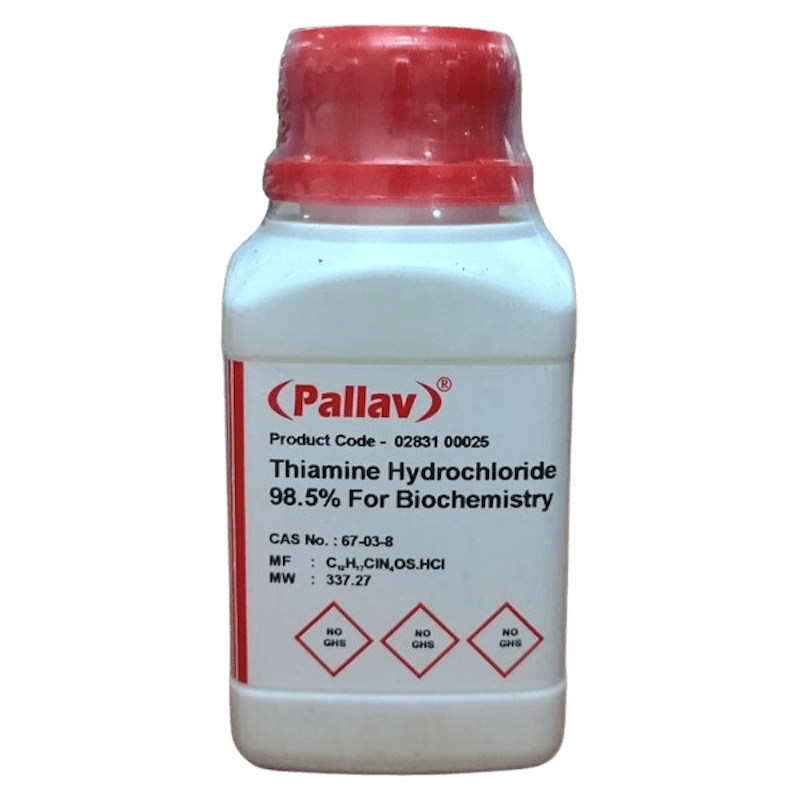
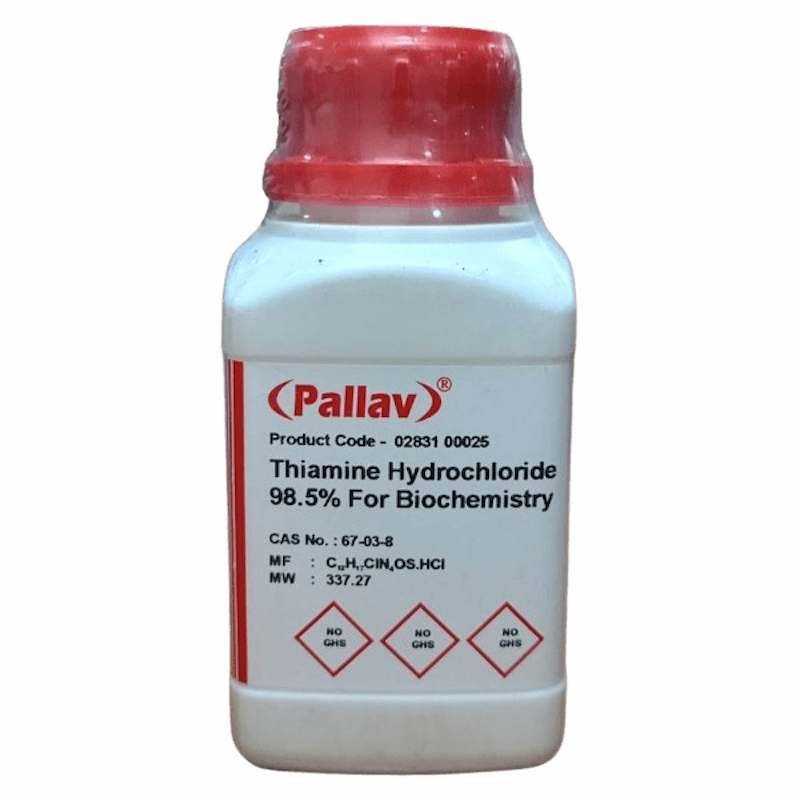
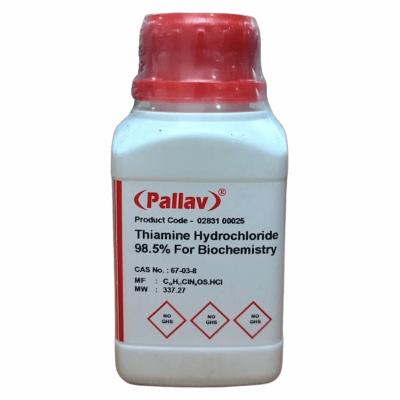
Thiamine Hydrochloride pure, 98.5%, 25Gm Powder, Aneurine hydrochloride, Vitamin B1 hydrochloride; Thi-Amine hydrochloride Molecular Formula: C12H17N4OSCl.HCl, M.W.: 337.27, Storage: Room Temperature, Shelf Life: 60 Months for laboratory use only. Click to Know More.
\n
\nThiamine hydrochloride, also known as vitamin B1, is a water-soluble vitamin that plays a crucial role in carbohydrate metabolism and is essential for energy production in the body. Here’s a detailed overview of thiamine hydrochloride:
\n
Chemical Structure
\n-
\n
- Chemical Formula: C₁₂H₁₇ClN₄OS \n
- Molecular Weight: 337.25 g/mol \n
- Appearance: Typically a white or slightly yellow crystalline powder. \n
Functions of Thiamine Hydrochloride
\n-
\n
- Metabolism: Thiamine is essential for the metabolism of carbohydrates and amino acids, aiding in energy production. \n
- Nervous System: It plays a key role in nerve function and is vital for maintaining healthy nerve cells. \n
- Brain Health: Important for cognitive functions and may help prevent neurological disorders. \n
Sources of Thiamine Hydrochloride
\nThiamine is found in various foods, including: \n-
\n
- Whole grains (brown rice, oats) \n
- Legumes (beans, lentils) \n
- Nuts and seeds \n
- Meat (especially pork) \n
- Fortified foods (breakfast cereals, bread) \n
Deficiency
\nA thiamine deficiency can lead to health issues such as: \n-
\n
- Beriberi: A condition affecting the cardiovascular and nervous systems. \n
- Wernicke-Korsakoff Syndrome: A serious neurological disorder often associated with chronic alcoholism. \n
Dosage and Supplementation
\n-
\n
- Recommended Daily Allowance (RDA): Varies by age, gender, and life stage, but generally around 1.1 to 1.2 mg for adults. \n
- Forms: Available in various forms, including thiamine hydrochloride supplements. \n
Side Effects and Toxicity
\n-
\n
- Thiamine is generally considered safe, and toxicity is rare due to its water-soluble nature. However, excessive supplementation can lead to side effects such as:
\n
-
\n
- Allergic reactions (rare) \n
- Gastrointestinal disturbances \n
\n
Applications of Thiamine Hydrochloride
\n-
\n
- Dietary Supplements: Used to prevent or treat thiamine deficiency. \n
- Medical Uses: Administered in clinical settings for patients at risk of deficiency, especially those with malnutrition or alcohol dependency. \n
- Food Fortification: Commonly added to foods to help prevent deficiencies in populations. \n
Storage Indication:
\n-
\n
- Should be stored in a cool, dry place away from light to maintain its stability. \n
-
\n
- Thiamine Hydrochloride \n
- Purity: 98.5% \n
- Pack Size: 25Gm Powder \n
- Made in India \n

Customer Questions and answers :
Login to ask a question
