
 Global Finds
  Quick Commerce
  Daily Bazar
  Electronics & Appliances
  Mother, Baby & Toys
  Beauty
  Sports
  Automotive
  Stationery, Books & Music
 _20.png) Fashion Luxe
Fashion Luxe  Fashion
 _20.jpeg) Home
Home  Garden & Pet Care
  Special Weekly Offer
  Grocery
  Global Finds
  Quick Commerce
  Daily Bazar
  Electronics & Appliances
  Mother, Baby & Toys
  Beauty
  Sports
  Automotive
  Stationery, Books & Music
 _20.png) Fashion Luxe
Fashion Luxe  Fashion
 _20.jpeg) Home
Home  Garden & Pet Care
  Special Weekly Offer
  Grocery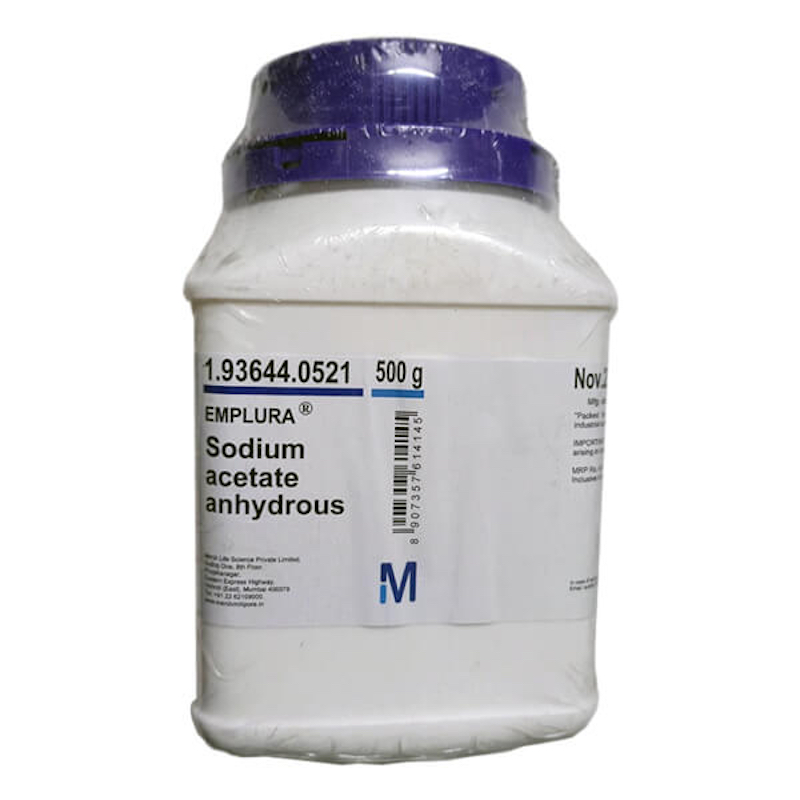
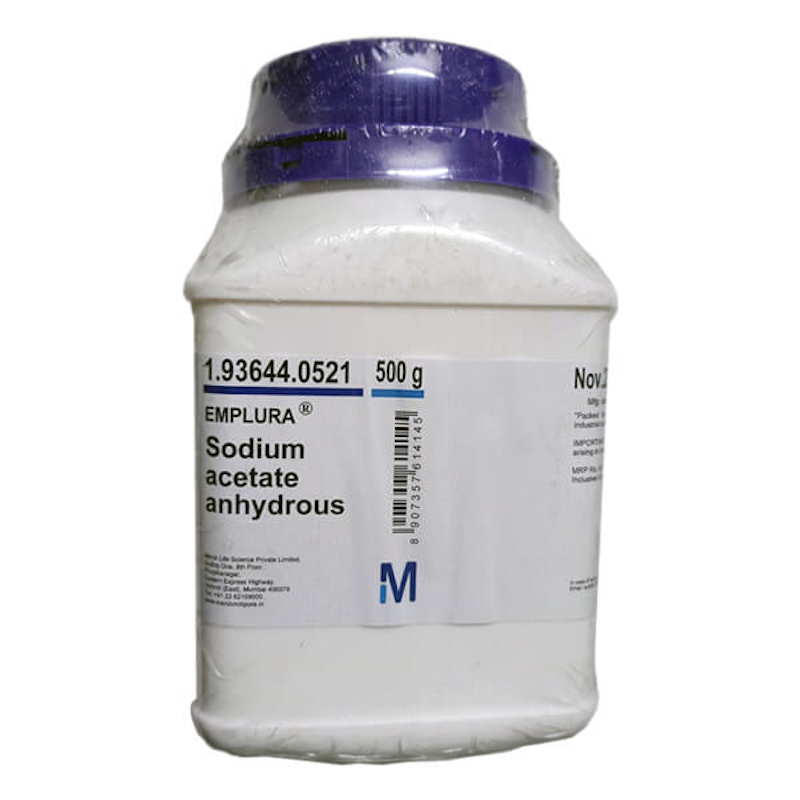
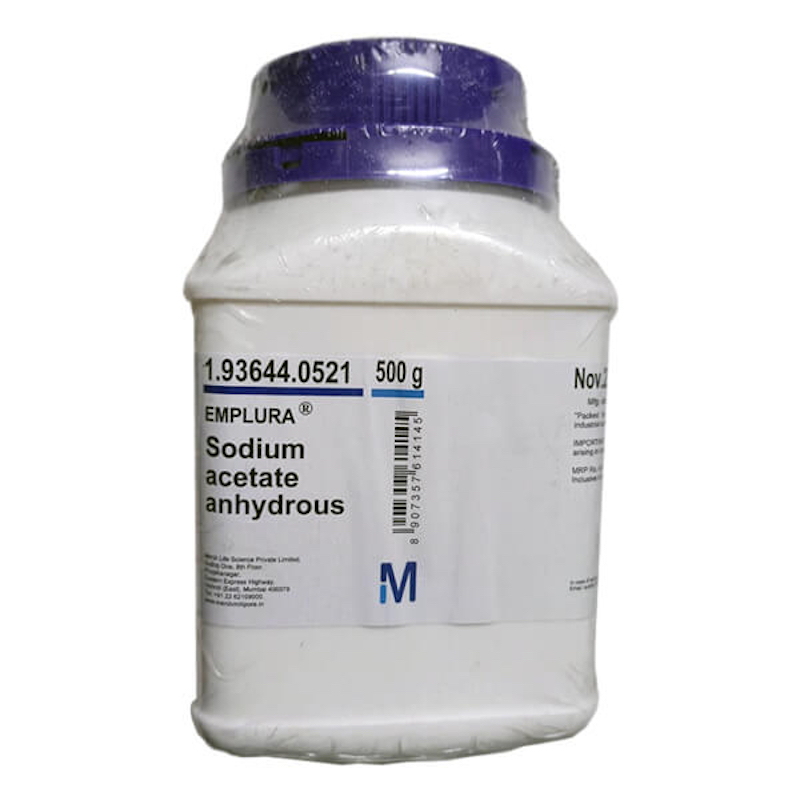
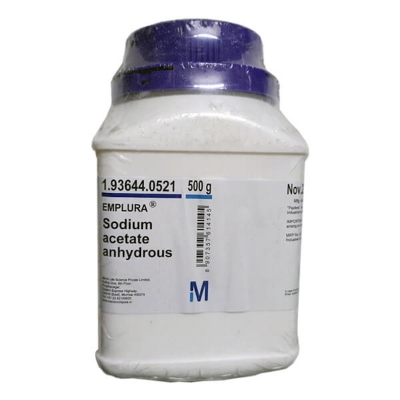
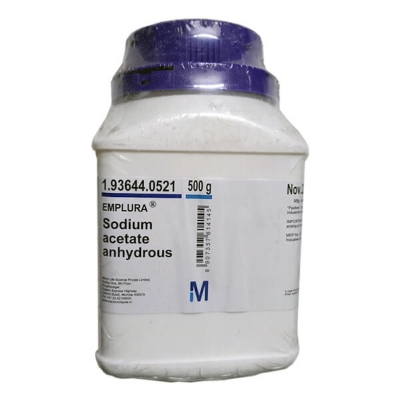
Sodium acetate anhydrous is a sodium salt of acetic acid, with the chemical formula C₂H₃NaO₂. It appears as a white, crystalline powder and is highly soluble in water. It is also a lab reagent available in Labtex Bangladesh at the reasonable price.
\n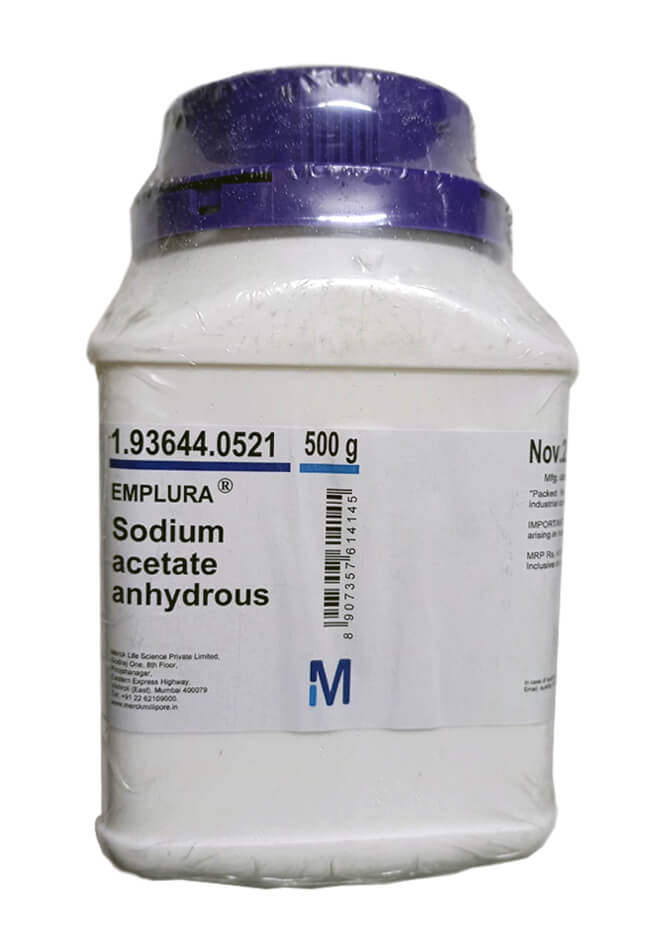
Chemical Properties
\n-
\n
- Chemical Formula: C₂H₃NaO₂ \n
- Molecular Weight: 82.03 g/mol \n
- Structure: Consists of an acetate ion (CH₃COO⁻) and a sodium ion (Na⁺). \n
- Appearance: White crystalline solid or powder. \n
- Density: Approximately 1.528 g/cm³. \n
- pH: Typically around 7 when dissolved in water. \n
Physical Properties
\n-
\n
- Melting Point: 323 °C (613 °F), decomposes before boiling. \n
- Solubility: Soluble in water (1 g in about 1 mL at 20 °C), but insoluble in organic solvents like ethanol. \n
General Uses of Sodium Acetate Anhydrous
\n-
\n
- Buffer Solutions:
\n
-
\n
- Sodium acetate is commonly used in buffer solutions in biochemical applications to maintain pH levels in biological experiments. \n
\n - Food Industry:
\n
-
\n
- Acts as a preservative and flavor enhancer, particularly in snacks and processed foods. It is often labeled as E262. \n
\n - Heating Pads:
\n
-
\n
- In reusable heat packs, sodium acetate can be supercooled in a liquid state and releases heat upon crystallization when a metal disc is flexed. \n
\n - Pharmaceuticals:
\n
-
\n
- Used in various medicinal formulations, including as a saline laxative. \n
\n - Chemical Synthesis:
\n
-
\n
- Serves as a reagent in organic synthesis and as a catalyst in certain reactions. \n
\n
Synthesis
\nSodium acetate can be synthesized through various methods, including: \n-
\n
- Neutralization Reaction:
\n
-
\n
- Mixing acetic acid with sodium hydroxide or sodium bicarbonate produces sodium acetate. \n
- Reaction: CH3COOH+NaOH→CH3COONa+H2O\text{CH}_3\text{COOH} + \text{NaOH} \rightarrow \text{CH}_3\text{COONa} + \text{H}_2\text{O} \n
\n
Safety and Handling of Sodium Acetate
\n-
\n
- Toxicity: Generally recognized as safe (GRAS) when used in food and pharmaceuticals. However, excessive consumption can lead to gastrointestinal disturbances. \n
- Handling: Should be handled with gloves and eye protection to avoid irritation, especially in powder form. \n
- Storage: Store in a cool, dry place in a tightly closed container to prevent moisture absorption. \n
Environmental Impact
\nC₂H₃NaO₂ is biodegradable and considered environmentally friendly lab reagent, but large quantities should be managed to avoid potential water contamination. \n \n-
\n
- Sodium Acetate Anhydrous \n
- Pack Size: 500gm \n
- Brand: Merck, India \n

Customer Questions and answers :
Login to ask a question
