
 Global Finds
  Quick Commerce
  Daily Bazar
  Electronics & Appliances
  Mother, Baby & Toys
  Beauty
  Sports
  Automotive
  Stationery, Books & Music
 _20.png) Fashion Luxe
Fashion Luxe  Fashion
 _20.jpeg) Home
Home  Garden & Pet Care
  Special Weekly Offer
  Grocery
  Global Finds
  Quick Commerce
  Daily Bazar
  Electronics & Appliances
  Mother, Baby & Toys
  Beauty
  Sports
  Automotive
  Stationery, Books & Music
 _20.png) Fashion Luxe
Fashion Luxe  Fashion
 _20.jpeg) Home
Home  Garden & Pet Care
  Special Weekly Offer
  Grocery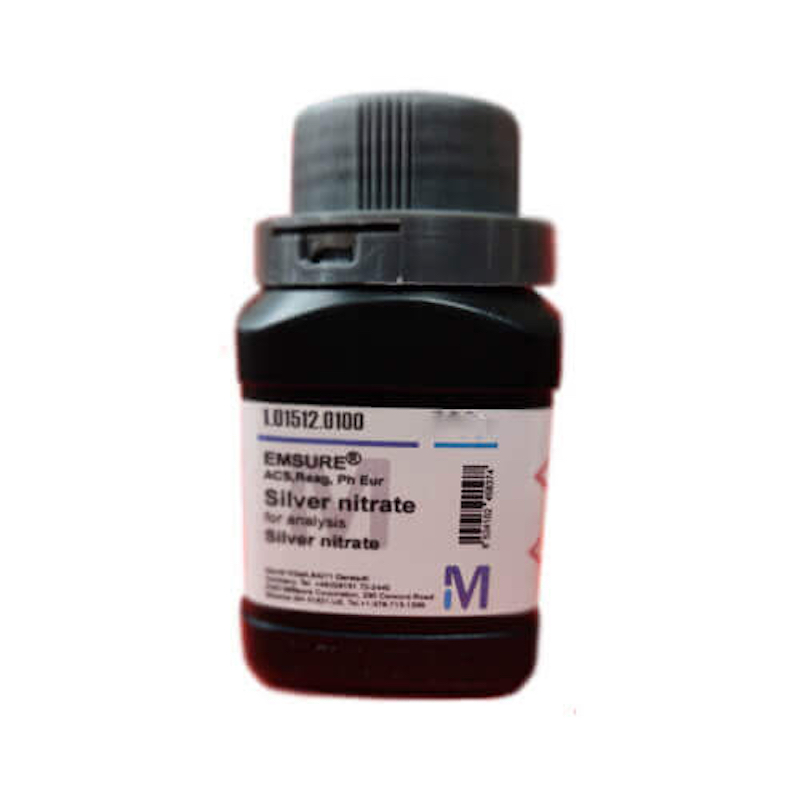
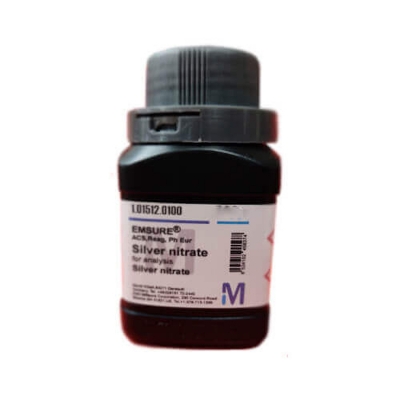
Silver nitrate (AgNO₃) is a chemical compound that appears as a colorless to white crystalline solid. It is highly soluble in water and is commonly used in a variety of applications, both in laboratory settings and industrial processes.
\n
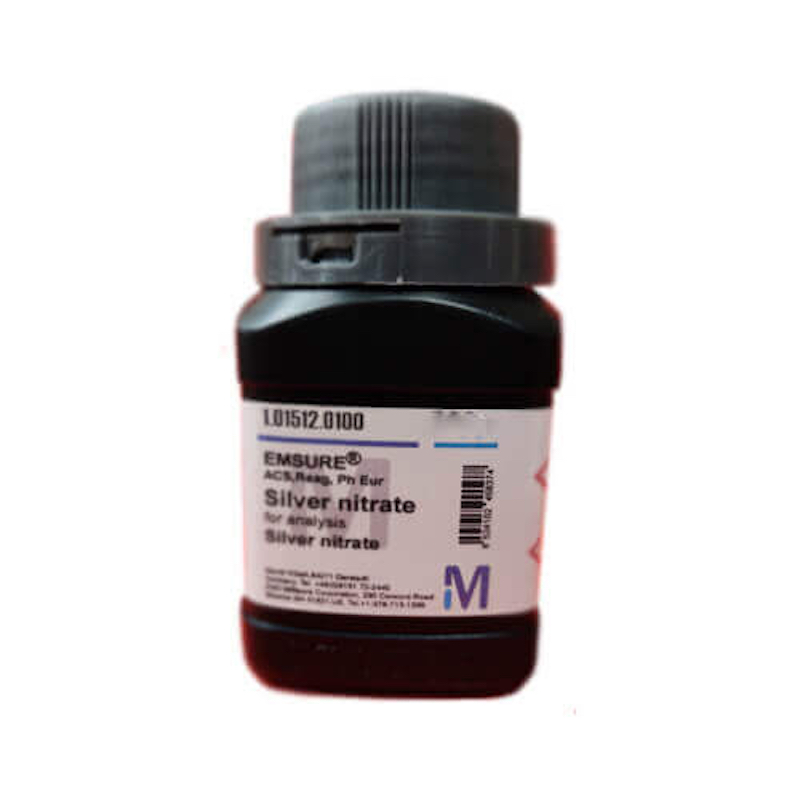
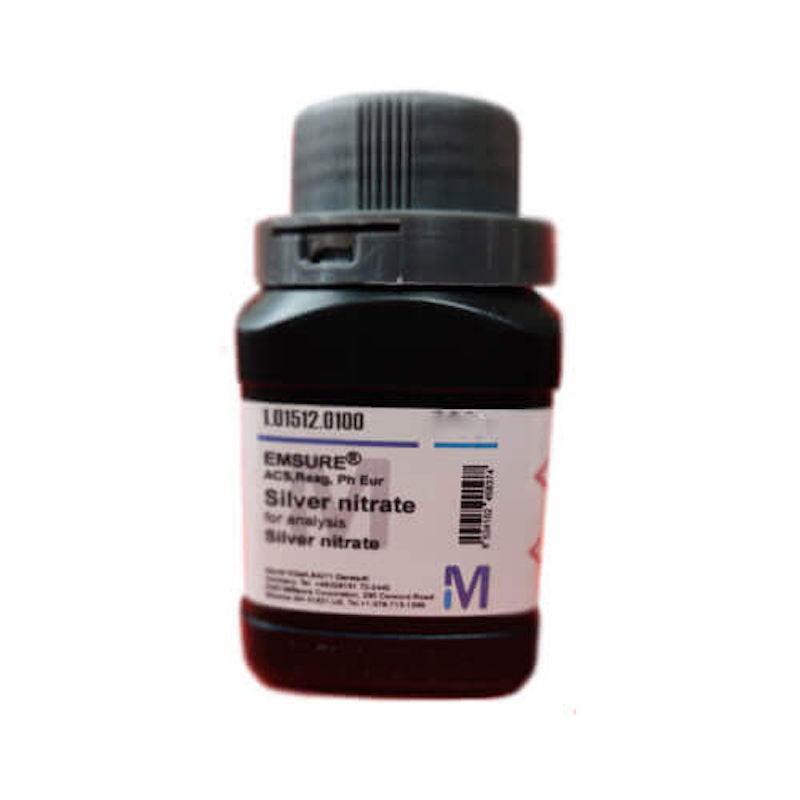
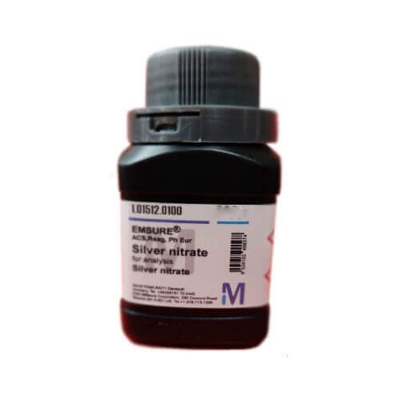
Silver Nitrate for analysis, 25 gm, Merck, Germany
\n-
\n
- Silver nitrate for analysis EMSURE® ACS, Reag, pH Eur \n
- Packing: 25 gm \n
- Brand: Merck \n
- Made in Germany \n
- Note: Here displayed product picture is not a real picture. \n
General Uses:
\n-
\n
- Antiseptic: Historically, silver nitrate has been used as a topical antiseptic, especially in the treatment of burns, wounds, and infections. It’s also used to prevent neonatal conjunctivitis (eye infection) in newborns caused by Neisseria gonorrhoeae. \n
- Photography: Silver nitrate is a key component in the preparation of photographic materials. It reacts with light-sensitive compounds to create images on film or photographic paper. \n
- Chemical Synthesis: Silver nitrate is used in laboratories for various reactions, including:
\n
-
\n
- Precipitation of silver halides (e.g., silver chloride when reacted with chloride ions). \n
- Testing for halide ions (chloride, bromide, iodide) in solution by forming precipitates. \n
\n - Tanning Leather: Silver nitrate can be used in the tanning of leather, although it's less common than other agents. \n
- Cauterizing Agent: It’s used in some medical and surgical procedures to remove warts or cauterize tissue, especially in cases where chemical cauterization is preferred over physical methods. \n
- Staining: It is used in microscopy and histology to stain biological tissues and make structures more visible under a microscope. \n
Safety and Precautions:
\n-
\n
- Corrosive: Silver nitrate is corrosive and can cause damage to skin, eyes, and mucous membranes. Always handle it with care, wearing appropriate protective equipment like gloves, goggles, and lab coats. \n
- Staining: It can stain skin and clothing black or brown, so avoid contact with your skin. If silver nitrate comes in contact with the skin, it can usually be removed with a dilute solution of sodium chloride (common table salt). \n
- Toxicity: It can be toxic if ingested or inhaled in large quantities. Ingesting silver nitrate can lead to symptoms such as nausea, vomiting, and abdominal pain. \n
- Storage: Silver nitrate should be stored in airtight containers, protected from light, and kept in a cool, dry place to prevent it from decomposing. \n
Chemical Reactions:
\n-
\n
- Reaction with Halides: Silver nitrate reacts with halides (chlorides, bromides, iodides) in aqueous solutions to form precipitates of silver halides, which are important in qualitative analysis:
 \n
\n - Photographic Reaction: Silver nitrate is used in traditional photographic processes where it reacts with light to form silver metal, which creates the image on photographic film. \n
- 0

Customer Questions and answers :
Login to ask a question
