Model of Plant Cell on Board


Tk 850
    \n
  • Plant Cell Model
  • \n
  • Ideal for Training & Education
  • \n
  • Made in India
  • \n

*


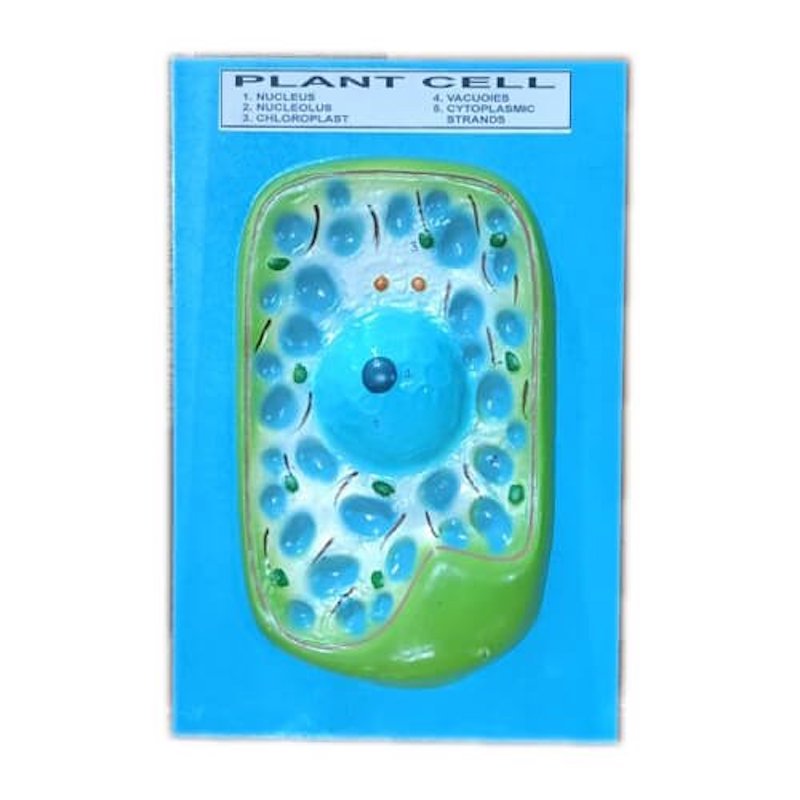
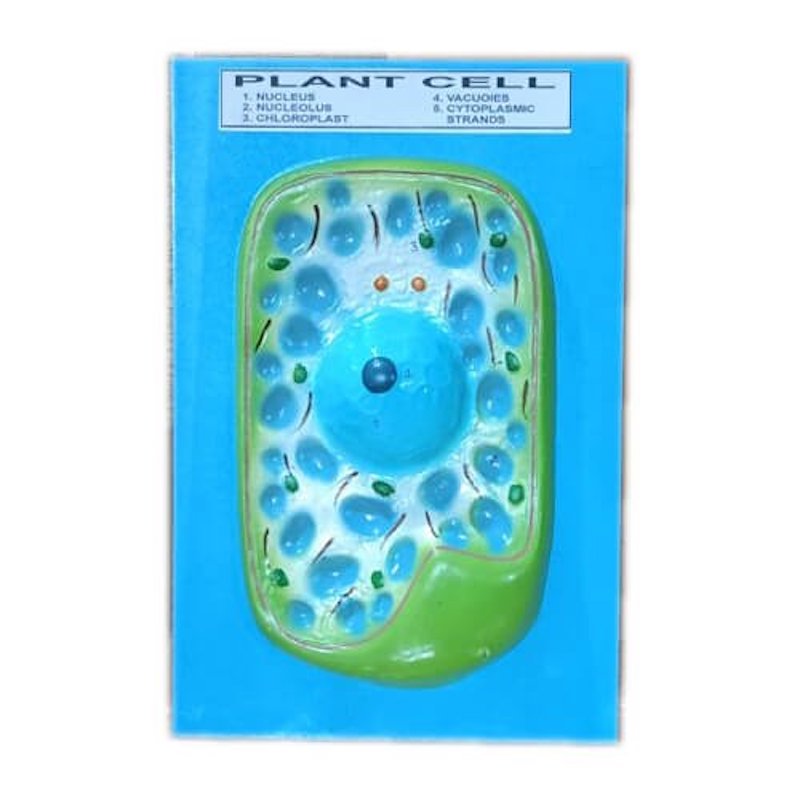
This is the Scientific Model of Plant Cell on Board for Education and Training. \n

The Model of Plant Cell consists of

\n
    \n
  • Nucleus
  • \n
  • Nucleolus
  • \n
  • Chloroplast
  • \n
  • Vacuoies
  • \n
  • Cytoplasmic Stranos
  • \n
\nA Model of Plant Cell is a visual representation of the various structures and organelles found within a plant cell. These models are used for educational purposes to help students understand the anatomy and functions of plant cells. Here's an overview of what a typical plant cell model might include: \n \n1. Cell Wall: A rigid outer layer that provides structural support and protection to the cell. In plant cells, the cell wall is made primarily of cellulose. \n \n2. Cell Membrane: A semipermeable membrane that surrounds the cell and regulates the movement of substances in and out of the cell. \n \n3. Cytoplasm: The gel-like substance that fills the interior of the cell, where organelles are suspended. \n \n4. Nucleus: The control center of the cell, which contains the cell's genetic material (DNA) and regulates cellular activities. \n \n5. Chloroplasts: Organelles that contain chlorophyll and are responsible for photosynthesis, the process by which plants convert sunlight into energy. \n \n6. Vacuole: A large fluid-filled sac within the cell that stores water, nutrients, and waste products. In plant cells, the central vacuole helps maintain turgor pressure and provides structural support. \n \n7. Mitochondria: Organelles that produce energy (ATP) through cellular respiration, converting nutrients into usable energy for the cell. \n \n8. Endoplasmic Reticulum (ER): A network of membrane-bound tubes and sacs that are involved in protein and lipid synthesis. \n \n9. Golgi Apparatus: A stack of membrane-bound vesicles that processes, sorts, and packages proteins and lipids for transport within the cell or for secretion outside the cell. \n \n10. Ribosomes: Small organelles that are the site of protein synthesis, where amino acids are assembled into proteins according to the instructions encoded in mRNA. \n \n11. Plasmodesmata: Channels that traverse the cell walls, allowing for communication and transport of molecules between adjacent plant cells. \n \n12. Other Organelles: Depending on the complexity of the model, additional organelles such as peroxisomes, microtubules, and microfilaments may also be included.


    \n
  • Plant Cell Model
  • \n
  • Ideal for Training & Education
  • \n
  • Made in India
  • \n
Customer Questions and answers :

Login to ask a question