
 Global Finds
  Quick Commerce
  Daily Bazar
  Electronics & Appliances
  Mother, Baby & Toys
  Beauty
  Sports
  Automotive
  Stationery, Books & Music
 _20.png) Fashion Luxe
Fashion Luxe  Fashion
 _20.jpeg) Home
Home  Garden & Pet Care
  Special Weekly Offer
  Grocery
  Global Finds
  Quick Commerce
  Daily Bazar
  Electronics & Appliances
  Mother, Baby & Toys
  Beauty
  Sports
  Automotive
  Stationery, Books & Music
 _20.png) Fashion Luxe
Fashion Luxe  Fashion
 _20.jpeg) Home
Home  Garden & Pet Care
  Special Weekly Offer
  Grocery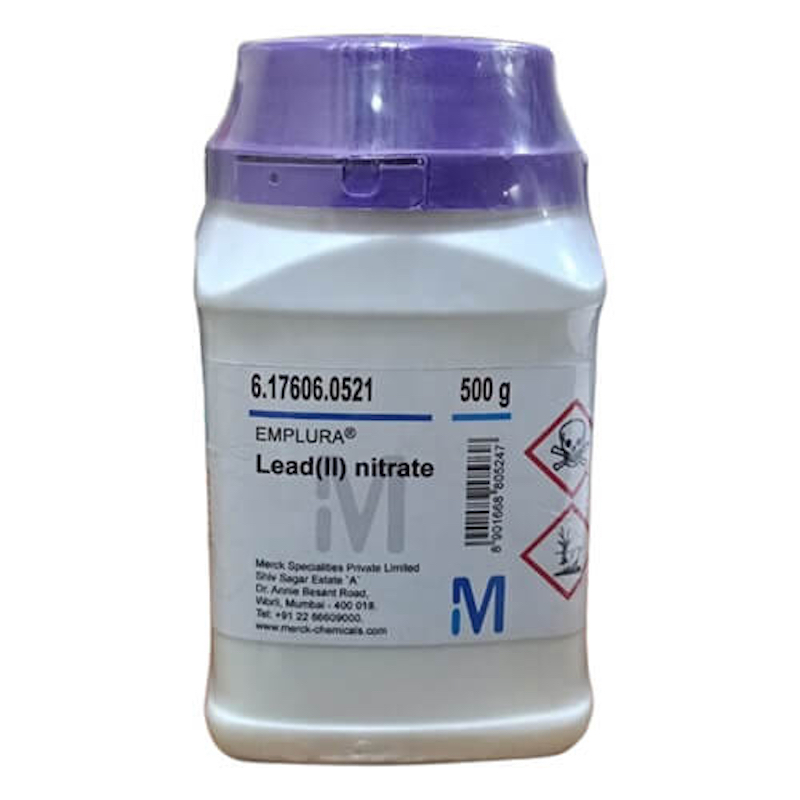
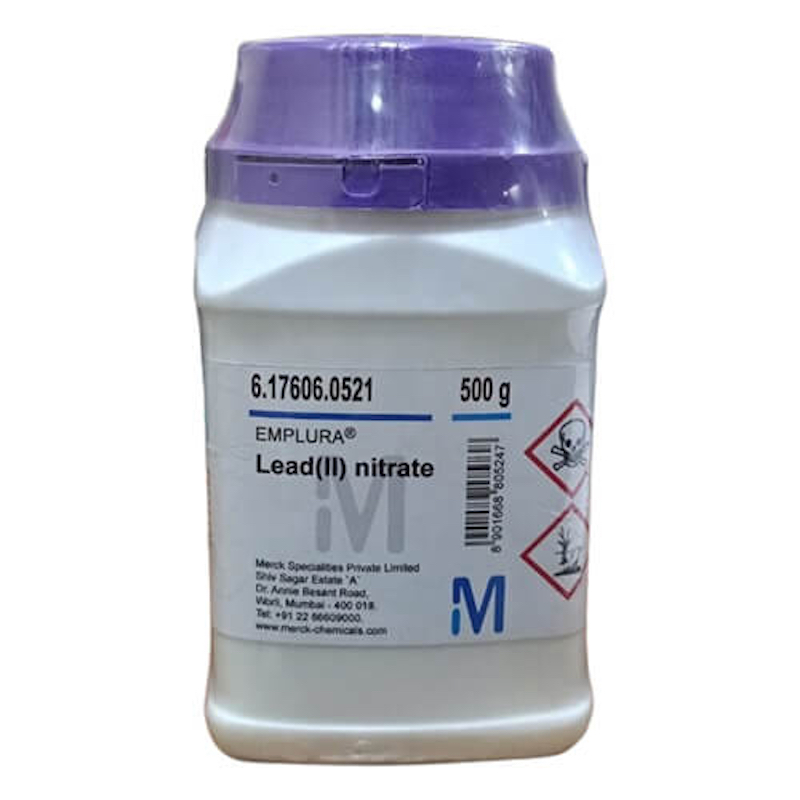
Lead Nitrate is a white or colorless, sand-like solid reagent. It is used in making matches and special explosives, in the dye and photography industries, and process of engraving.
\n
\nLead nitrate (Pb(NO₃)₂) is an inorganic chemical compound made up of lead, nitrogen, and oxygen. It is commonly used in various industrial, laboratory, and chemical applications. Lead nitrate is a white crystalline solid that is highly soluble in water, and it is known for its oxidizing properties.
\n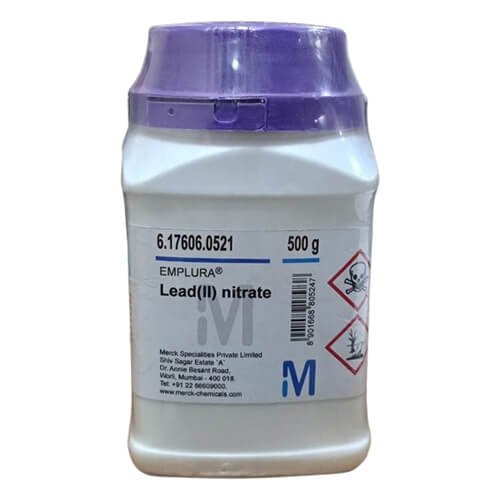
 \n
\n
\n
\n
Chemical Properties of Lead Nitrate:
\n-
\n
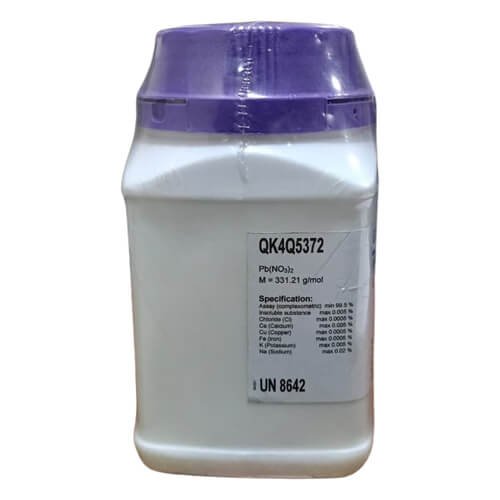
- Molecular Formula: Pb(NO₃)₂ \n
- Appearance: White, odorless, crystalline solid. \n
- Molar Mass: 331.2 g/mol. \n
- Solubility: Lead nitrate is highly soluble in water and alcohol. \n
- Density: Approximately 4.53 g/cm³. \n
- Melting Point: 470°C (878°F). \n
General Applications:
\n-
\n
- Lead nitrate has been used as a heat stabilizer in nylon and polyesters, as a coating for photo thermographic paper, and in rodenticides. \n
- Heating lead nitrate is a convenient means of making nitrogen dioxide. \n
- In the gold cyanidation process, the addition of lead(II) nitrate solution improves the leaching process. Only limited amounts (10 to 100 milligrams of lead nitrate per kilogram of gold) are required \n
- In organic chemistry, it may be used in the preparation of isothiocyanates from dithiocarbamates. Its use as a bromide scavenger during SN1 substitution has been reported. \n
\n
\n -
\n
- Lead Nitrate Lab Grade Reagent \n
- Pack Size: 500gm \n
- Brand: Merck, India \n

Customer Questions and answers :
Login to ask a question
