
 Global Finds
  Quick Commerce
  Daily Bazar
  Electronics & Appliances
  Mother, Baby & Toys
  Beauty
  Sports
  Automotive
  Stationery, Books & Music
 _20.png) Fashion Luxe
Fashion Luxe  Fashion
 _20.jpeg) Home
Home  Garden & Pet Care
  Special Weekly Offer
  Grocery
  Global Finds
  Quick Commerce
  Daily Bazar
  Electronics & Appliances
  Mother, Baby & Toys
  Beauty
  Sports
  Automotive
  Stationery, Books & Music
 _20.png) Fashion Luxe
Fashion Luxe  Fashion
 _20.jpeg) Home
Home  Garden & Pet Care
  Special Weekly Offer
  Grocery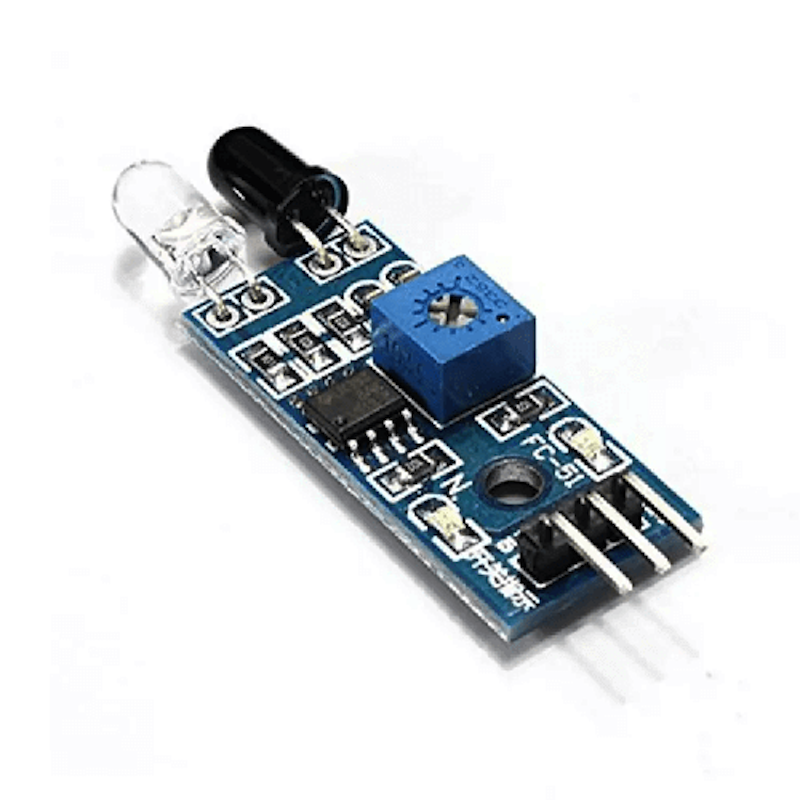
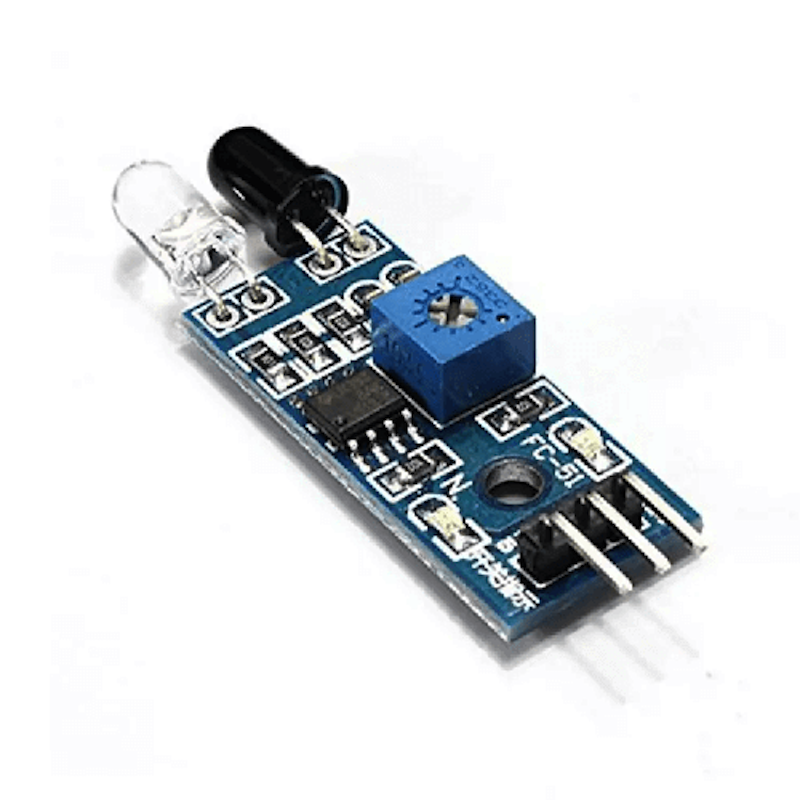
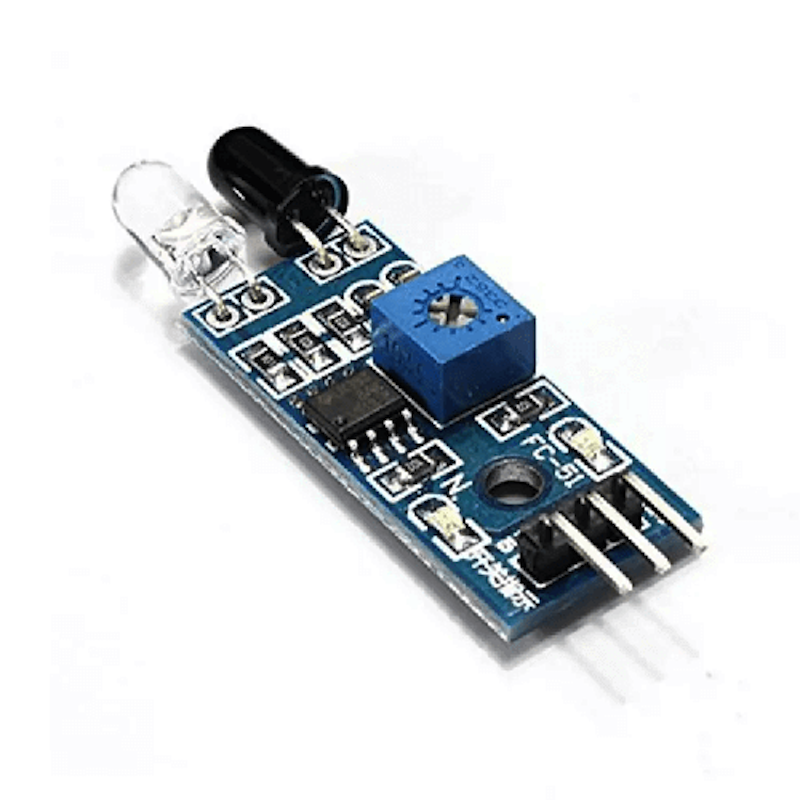
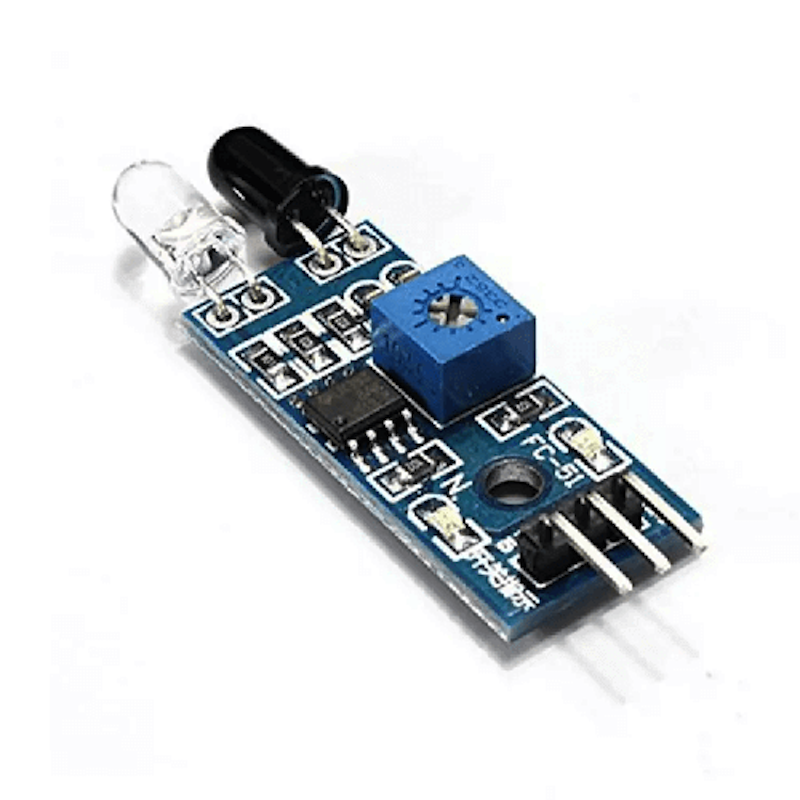
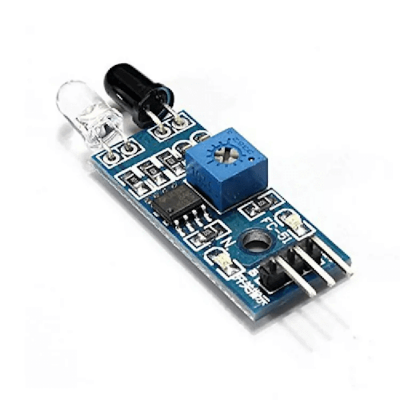
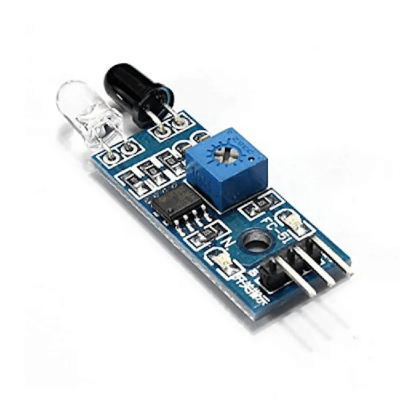
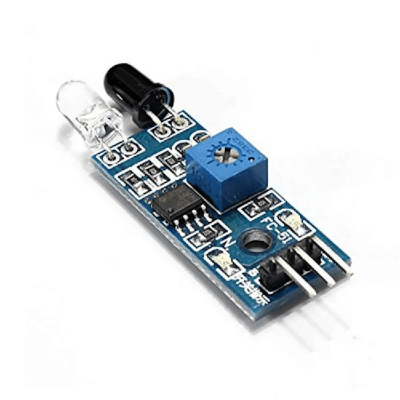
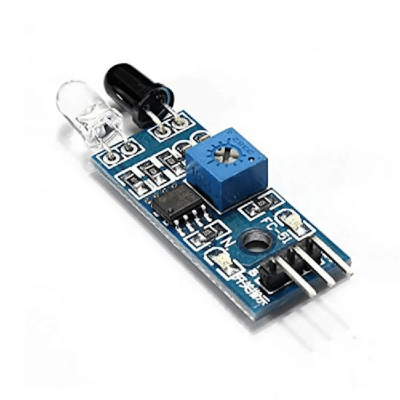
An infrared obstacle avoidance IR sensor module has two infrared sensors that can detect obstacles in front of them. It typically has three pins: VCC (power supply), GND (ground), and OUT (output). The VCC pin provides power to the module, usually 5V. The module has a built-in IR transmitter and receiver that emits IR energy and looks for reflected IR energy to detect obstacles. The output pin gives out a digital signal when it detects an obstacle or reflection. This signal is low-level. The module also has an onboard potentiometer that lets users adjust the detection range. The effective distance range is 2cm to 30cm.
\n
\n
\n
\n
Technical Specifications:
\n| PARAMETER | \nDETAILS | \n
|---|---|
| Model | \nIR Sensor Module | \n
| Operating Voltage | \n3.3V – 5V | \n
| Detection Range | \nAdjustable, up to 30cm | \n
| Wavelength | \n950nm | \n
| Output Signal | \nDigital (0 or 1) | \n
| Indicator LED | \nIncluded for visual feedback | \n
| Dimensions | \nCompact and space-efficient | \n
| Compatibility | \nSuitable for various robotic applications | \n
Explore the Datasheet:
\nUncover the technical intricacies of the Infrared Obstacle Avoidance IR Sensor Module by downloading our detailed datasheet. Gain insights into its specifications and unleash its potential for your projects. \n-
\n
- Datasheet \n
- User Manual \n
Here’s how it works:
\n-
\n
- An infrared obstacle sensor module has a built-in IR transmitter and IR receiver. \n
- The IR transmitter emits the IR signal. \n
- The IR receiver looks for the reflected IR signal to determine if the object is present or not. \n
- The presence of an obstacle is reflected in the OUT pin:
\n
-
\n
- If the obstacle is present in front of the sensor, the sensor’s OUT pin is LOW. \n
- If the obstacle is NOT present in front of the sensor, the sensor’s OUT pin is HIGH. \n
\n
-
\n
- Detection range: 2cm to 30cm \n
- Detection angle: 35 degrees \n
- Operating voltage: DC 3.3V to 5V \n
- Output signal: TTL level \n
- Made in China \n

Customer Questions and answers :
Login to ask a question
