


 Global Finds
  Quick Commerce
  Daily Bazar
  Electronics & Appliances
  Mother, Baby & Toys
  Beauty
  Sports
  Automotive
  Stationery, Books & Music
 _20.png) Fashion Luxe
Fashion Luxe  Jersey
  Sports Shoes
  Fashion
 _20.jpeg) Home
Home  Garden & Pet Care
  Special Weekly Offer
  Grocery
  Global Finds
  Quick Commerce
  Daily Bazar
  Electronics & Appliances
  Mother, Baby & Toys
  Beauty
  Sports
  Automotive
  Stationery, Books & Music
 _20.png) Fashion Luxe
Fashion Luxe  Jersey
  Sports Shoes
  Fashion
 _20.jpeg) Home
Home  Garden & Pet Care
  Special Weekly Offer
  Grocery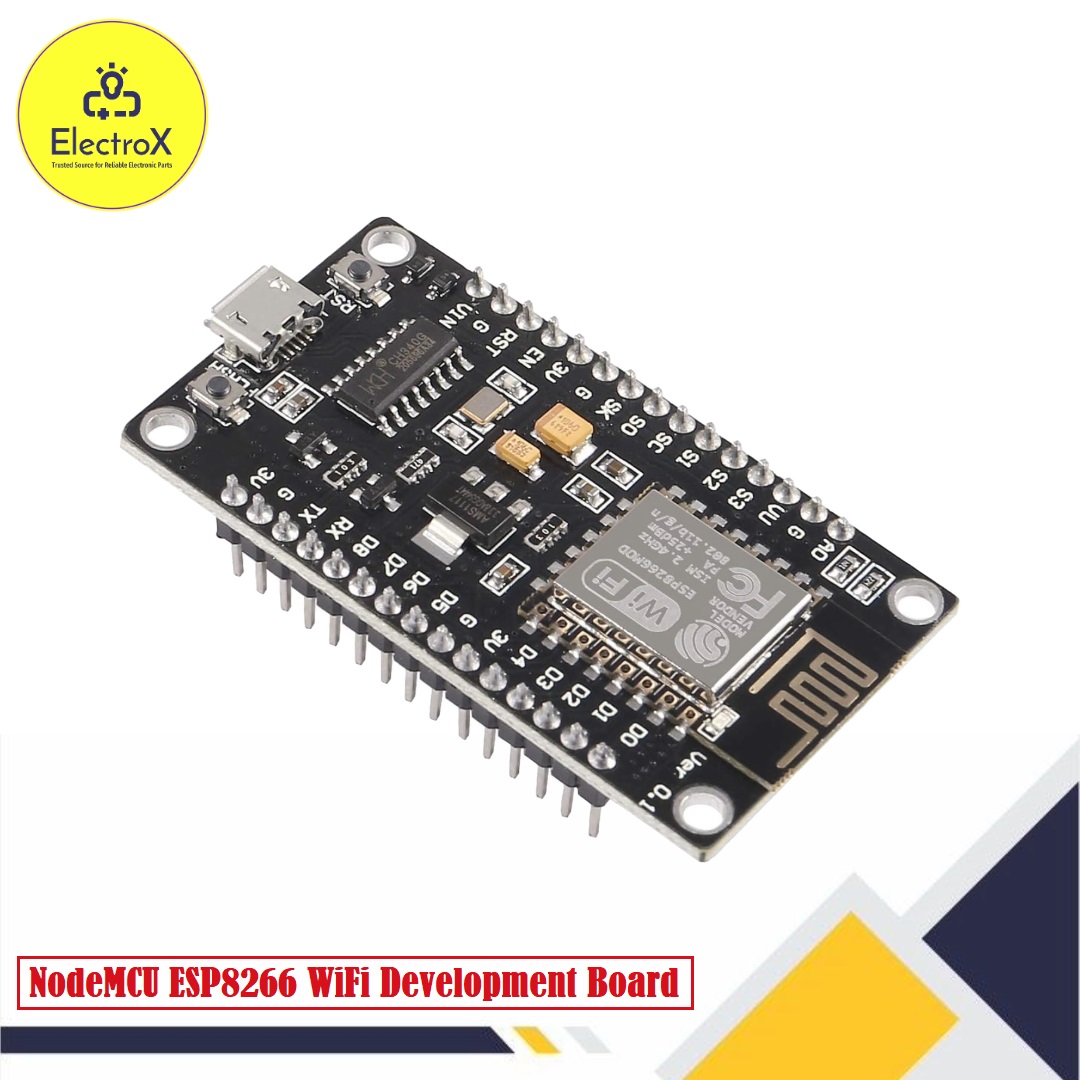
ESP8266 Based Wireless Module CH340 CH340G Nodemcu Lolin V3 WIFI Internet of Things development board
The NodeMCU Lolin V3 development board is a powerful, compact, and open-source platform that has become a cornerstone of the modern Internet of Things (IoT) and DIY electronics movement. At its heart lies the now-legendary ESP8266 microcontroller, a chip that single-handedly democratized wireless connectivity by offering robust Wi-Fi capabilities at a fraction of the cost of its predecessors. This particular "Lolin" version, distinct from some earlier models, incorporates the CH340G USB-to-Serial converter chip, a reliable and cost-effective solution for communication between the board and a computer.
The true genius of the NodeMCU V3 is its seamless integration of all necessary components into a developer-friendly package. The board is built around the ESP-12E module, which houses the ESP8266EX processor—a Tensilica L106 32-bit core running at 80 MHz—alongside 4 MB of flash memory and 64 KB of SRAM. This module is pre-soldered to the board, saving users the difficulty of hand-soldering the tiny, surface-mount component. The board’s layout provides easy access to the ESP8266's GPIO pins (General Purpose Input/Output), including digital pins, PWM outputs, I2C, and a single 10-bit ADC pin, all broken out to the sides for simple connection to sensors, displays, and actuators via Dupont wires on a breadboard.
A critical feature of any development board is its programming interface, and the Lolin V3 utilizes the CH340G chip for this purpose. This chip handles the vital task of translating data between the USB port on a computer and the UART serial interface of the ESP8266. This allows users to effortlessly upload new code (sketches) from the Arduino IDE directly to the board with a simple Micro-USB cable, which also provides power. This eliminates the need for external programmers and significantly lowers the barrier to entry for beginners.
The board’s primary function is to provide robust 802.11 b/g/n Wi-Fi connectivity (2.4 GHz), enabling a vast array of IoT applications. It can operate in three key modes: as a station connecting to an existing Wi-Fi network, as a soft Access Point creating its own network, or simultaneously as both. This flexibility allows it to serve as the brain for smart home devices like Wi-Fi-controlled lights and sensors, weather stations that post data online, or network-connected robots.
Beyond its hardware, the board's success is fueled by its software ecosystem. It is famously compatible with the Arduino IDE using the ESP8266 core package, allowing millions of existing Arduino users to leverage their knowledge and libraries to program it in C++. Alternatively, it can be programmed with the native NodeMCU firmware, which uses the lightweight Lua scripting language for rapid prototyping. This combination of low cost, integrated Wi-Fi, ease of use, and powerful community support makes the NodeMCU Lolin V3 an indispensable tool for hobbyists, students, and professional prototypers bridging the physical and digital worlds.

Login to ask a question
