



 Daily Bazar
  Electronics
  Mother, Baby & Toys
  Beauty
  Sports
  Automotive
  Stationery, Books & Music
  Computer Table
  Computer Table
  Special Weekly Offer
  Global Finds
  Quick Commerce
 _20.png) Fashion Luxe
Fashion Luxe  Jersey
  Sports Shoes
  Fashion
 _20.jpeg) Home
Home  Garden & Pet Care
  Grocery
  Daily Bazar
  Electronics
  Mother, Baby & Toys
  Beauty
  Sports
  Automotive
  Stationery, Books & Music
  Computer Table
  Computer Table
  Special Weekly Offer
  Global Finds
  Quick Commerce
 _20.png) Fashion Luxe
Fashion Luxe  Jersey
  Sports Shoes
  Fashion
 _20.jpeg) Home
Home  Garden & Pet Care
  Grocery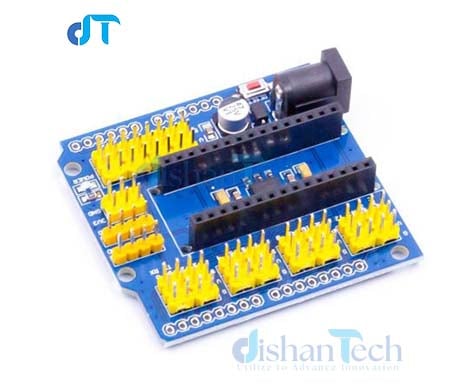
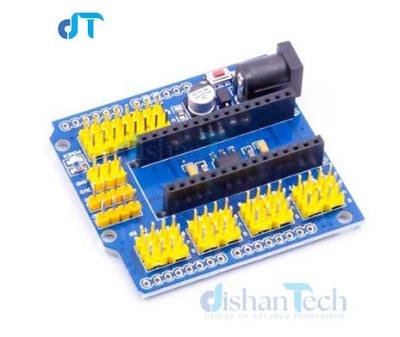
An "Arduino Nano Expansion Shield" is a generic term for a type of accessory or add-on board designed to extend the functionality and capabilities of an Arduino Nano microcontroller board. The specific details and features of such a shield can vary depending on the manufacturer and design, but here are some common elements you might find on an Arduino Nano Expansion Shield:
Pin Headers: The shield typically has pin headers that allow you to plug it directly onto the Arduino Nano board. This establishes electrical connections between the Nano and the shield.
Additional Connectors: The shield may include additional connectors or sockets for various purposes, such as connecting sensors, actuators, displays, or other components. These connectors often provide easy access to the Arduino's digital and analog pins.
Onboard Components: Some shields come with onboard components, such as LEDs, buttons, or specific sensors. These components can be used for prototyping or experimentation.
Perforated or Prototyping Area: Some shields include a perforated or prototyping area, typically a grid of holes that allow you to solder or connect custom components to the shield, expanding its functionality.
I/O Labels: Most shields will have labels indicating the purpose of each pin or connector, making it easier to connect external devices or components.
Power Supply Options: Some shields might include voltage regulators or power supply options to provide a stable power source to your Arduino and connected devices.
Compatibility: Arduino Nano Expansion Shields are typically designed to be compatible with the Arduino Nano form factor, which includes a specific size and pinout. It's important to ensure that the shield you choose is compatible with your specific Arduino Nano board.
Specific Functions: Depending on the shield's intended use, it may offer specific functions or features, such as motor control, communication interfaces (e.g., Bluetooth, Wi-Fi, or Ethernet), display support, audio capabilities, or more.
Stackable Design: Many shields are designed to be stackable, allowing you to stack multiple shields on top of each other to create complex projects. However, be mindful of potential conflicts and resource limitations when stacking multiple shields.
Software Libraries: Some shields come with pre-built Arduino libraries that simplify programming and interaction with the onboard components or sensors.
It's important to check the documentation provided by the manufacturer or supplier of a specific Arduino Nano Expansion Shield to get precise details about its features, pinout, and usage. Arduino shields come in various forms, so you should choose the one that best suits your project's requirements.

Login to ask a question
